Education
Oculus Headsets Evolution | From Rift to Quest 3!
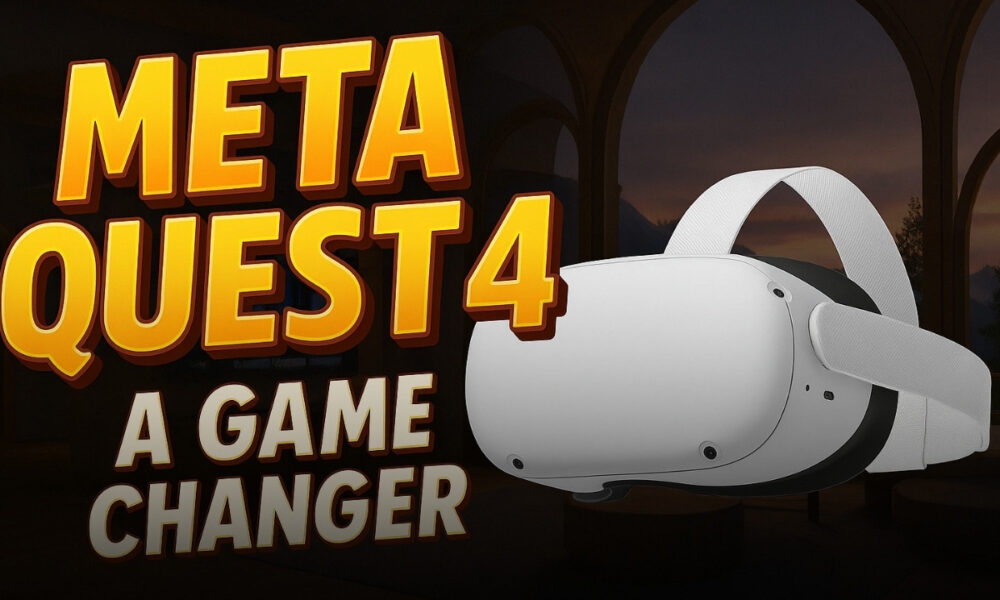
Oculus, now under Meta (formerly Facebook), has been one of the most transformative forces in the virtual reality (VR) industry. Since its Kickstarter beginnings in 2012, Oculus has evolved from tethered PC headsets to standalone wireless devices that bring VR gaming, fitness, and social experiences to life.
With each version, Oculus refined its hardware, improved tracking, and deepened content integration. Whether you’re a gamer, developer, or curious newcomer, understanding Oculus’s headset timeline helps highlight where VR has been — and where it’s going.
All Oculus Headset Versions (2013–2025)
| Headset Version | Launch Year | Type | Key Feature |
|---|---|---|---|
| Oculus Rift DK1 | 2013 | Developer Kit | First prototype with 3DOF head tracking |
| Oculus Rift DK2 | 2014 | Developer Kit | Improved resolution and positional tracking |
| Oculus Rift CV1 | 2016 | PC VR | First consumer version with motion controllers |
| Oculus Go | 2018 | Standalone | Affordable, basic mobile VR |
| Oculus Quest | 2019 | Standalone | 6DOF freedom, no PC needed |
| Oculus Rift S | 2019 | PC VR | Easier setup with inside-out tracking |
| Oculus Quest 2 | 2020 | Standalone | Improved display, performance, and apps |
| Meta Quest Pro | 2022 | Mixed Reality | Pro-grade specs, color passthrough |
| Meta Quest 3 | 2023 | Mixed Reality | Best standalone performance, slim design |
| Meta Quest 4 (expected) | 2025 | MR/AR Hybrid | Rumored next-gen optics and AI integration |
1. Oculus Rift DK1 & DK2 (2013–2014)
Oculus began with two developer kits:
- DK1: Introduced 3DOF tracking and a 1280×800 display.
- DK2: Added positional tracking and higher resolution (1920×1080), making VR more immersive and stable.
These versions were mainly targeted at developers and Kickstarter backers.
2. Oculus Rift CV1 (2016)
The first consumer version, Oculus Rift CV1, connected to a PC via HDMI and USB. It introduced Touch controllers, integrated audio, and precise tracking with external sensors.
Key Features:
- 2160×1200 OLED display
- 90Hz refresh rate
- Full 6DOF tracking with external cameras
The CV1 became the foundation for early PC VR gaming.
3. Oculus Go (2018)
This was Oculus’s first standalone headset, aimed at media consumption and casual VR experiences.
Limitations:
- 3DOF (no head movement tracking)
- Limited app ecosystem
- No hand tracking
Still, Oculus Go made VR portable and affordable, especially for media apps like Netflix and YouTube VR.
4. Oculus Quest (2019)
Oculus Quest changed the game by offering:
- Wireless 6DOF VR with no PC needed
- Full hand tracking support
- Built-in room-scale sensors
It became the most popular entry point into VR and helped VR go mainstream thanks to its balance of mobility and performance.
5. Oculus Rift S (2019)
An upgrade to the original PC VR experience, Rift S featured:
- Inside-out tracking (no external sensors)
- Single LCD panel with 2560×1440 resolution
- Improved comfort and audio
Though it offered better ease of use, it lacked manual IPD adjustment and was discontinued in 2021.
6. Oculus Quest 2 (2020)
By far the best-selling VR headset ever, Quest 2 improved nearly every aspect:
- Snapdragon XR2 chip
- 1832×1920 per eye resolution
- 90Hz to 120Hz refresh rate
- Strong content ecosystem
It ran both standalone apps and could be connected to a PC via Oculus Link for AAA PCVR gaming.
7. Meta Quest Pro (2022)
Now branded under Meta, Quest Pro targets developers, professionals, and early adopters.
Unique Features:
- Pancake lenses for a slimmer design
- Full-color mixed reality passthrough
- Eye and face tracking
Despite its $1500+ price tag, it showed where future XR hardware is headed.
8. Meta Quest 3 (2023)
Meta Quest 3 brought MR and VR into one unified device:
- High-fidelity full-color passthrough
- New Snapdragon XR2 Gen 2 chip
- Slimmer, more comfortable design
- Great performance for both productivity and gaming
It set the benchmark for future VR/MR hybrid devices.
9. Meta Quest 4 (Coming 2025)
Expected updates:
- AI-assisted spatial tracking
- Higher resolution microOLED or LCoS panels
- Custom XR silicon chip by Meta
- Potential full AR features with slim optics
If Meta delivers on its promise, Quest 4 could be the first mass-market mixed reality headset with AI-native capabilities.
How Oculus Changed the Industry
Oculus was not just about headsets. It created:
- The Oculus Store (later Meta Store)
- Immersive social spaces like Horizon Worlds
- Standalone hardware VR accessible to millions
- Cross-platform support via Oculus Link
Its influence pushed Valve, HTC, Sony, and others to innovate rapidly.
Conclusion
From early dev kits to next-gen MR headsets, Oculus redefined how we interact with virtual worlds. Every version — from Rift CV1 to Meta Quest 3 — marked a technological leap in resolution, tracking, and freedom.
With Meta Quest 4 on the horizon, Oculus’s legacy continues under Meta’s vision of the metaverse and mixed reality. Whether you’re into VR gaming, fitness, education, or social experiences, Oculus has a version tailored for your needs.