Technology
How Blockchain and Web3 Will Redefine Digital Interaction!
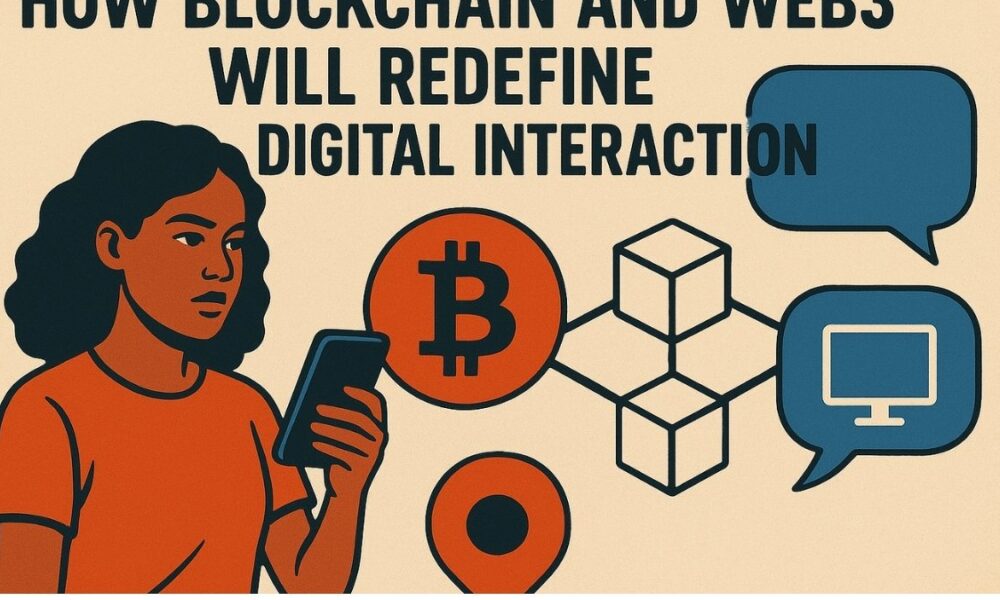
The evolution of social media has been dominated by centralized platforms like Facebook, Instagram, and X (formerly Twitter). While these platforms have connected billions of users worldwide, they have also raised critical concerns around privacy, data ownership, censorship, and algorithmic control. This is where decentralized social platforms are emerging as a game-changing alternative. Unlike traditional models, decentralized platforms distribute power, giving users more control over their data, content, and interactions.
In this article, we explore how decentralized social networks could reshape the future of online interaction, why they are gaining momentum, and what opportunities and challenges they bring.
What are Decentralized Social Platforms?
Decentralized social platforms are online networks built on blockchain technology or peer-to-peer systems where no single entity owns or controls the platform. Instead, decision-making and data storage are distributed across participants, ensuring transparency, security, and user autonomy.
Examples include:
- Mastodon – A federated network where users host their own servers.
- Lens Protocol – A blockchain-based social graph that allows users to own their digital identity.
- Steemit – A content-driven blockchain network rewarding creators with cryptocurrency.
Why Decentralization Matters in Social Media
1. Data Ownership and Privacy
Users retain full ownership of their content and personal information, reducing reliance on centralized servers vulnerable to data leaks.
2. Censorship Resistance
Unlike traditional platforms that can ban accounts or remove content at will, decentralized systems provide freedom of expression and community-driven moderation.
3. Monetization for Creators
Blockchain-based platforms enable creators to monetize directly through tokens, NFTs, or peer-to-peer transactions, bypassing platform-driven revenue cuts.
4. Transparency and Trust
Smart contracts and open-source protocols ensure transparency in how algorithms and decisions are made, building user trust.
5. Community Governance
Decentralized platforms often integrate DAO (Decentralized Autonomous Organization) structures, allowing communities to vote on rules, features, and policies.
Challenges of Decentralized Social Platforms
- Scalability Issues: Blockchain networks can face performance limitations when supporting millions of users.
- User Experience: Many decentralized platforms are still complex for mainstream users.
- Content Moderation: Balancing free speech with harmful content management remains difficult.
- Adoption Barriers: Centralized platforms still dominate with massive user bases, making it hard for decentralized networks to compete.
The Future of Online Interaction with Decentralization
Decentralized social platforms are not just alternatives but could become mainstream disruptors. They have the potential to:
- Build privacy-first ecosystems where user trust is the foundation.
- Create fair creator economies without exploitation.
- Develop interoperable digital identities, allowing users to carry their social graph across platforms.
- Promote global inclusivity, especially in regions where censorship and surveillance are prevalent.
As Web3 technologies mature, the line between social interaction, financial systems, and digital ownership will blur, leading to a new era of digital communities.
Table: Centralized vs. Decentralized Social Platforms
| Feature | Centralized Platforms | Decentralized Platforms |
|---|---|---|
| Data Ownership | Controlled by platform | Controlled by users |
| Monetization | Ad-based, platform-driven | Token-based, creator-driven |
| Content Moderation | Centralized decisions | Community/DAO governance |
| Privacy & Security | Vulnerable to data breaches | Enhanced via blockchain tech |
| Censorship | High (platform-controlled) | Low (user/community-driven) |
| Innovation Flexibility | Limited, controlled updates | Open-source, community-driven |
The Evolution of Decentralized Social Platforms
- Web3 and Identity Control
- Users can now own a universal digital identity (via NFTs or blockchain wallets) and carry it across platforms. This eliminates the need for creating new accounts on each network.
- Decentralized Storage
- Platforms are integrating IPFS (InterPlanetary File System) and Arweave for distributed data storage, making censorship and data loss nearly impossible.
- Cross-Platform Interoperability
- Unlike centralized platforms, decentralized ones can communicate across ecosystems, enabling seamless interaction between different communities.
- Creator Economy 2.0
- Beyond simple monetization, creators can launch their own tokens, DAOs, or NFT collections, giving fans partial ownership in their growth.
- AI and Decentralization
- Some projects are combining AI moderation tools with community governance to filter harmful content without centralized bias.
Why Decentralization is the Next Big Shift
1. End of Platform Lock-in
Users can take their followers, content, and reputation with them instead of being trapped inside one network.
2. Tokenized Incentives
Users and creators are directly rewarded with cryptocurrency or tokens for engagement, content creation, and community growth.
3. Global Inclusion
Decentralized platforms can bypass government restrictions, providing freedom of speech and access in countries where censorship is high.
4. User-Driven Algorithms
Instead of opaque feeds controlled by corporations, users can customize their algorithm, deciding what content to prioritize.
5. Community Power
Rules are set collectively through governance tokens, ensuring a fairer and more democratic digital ecosystem.
Emerging Decentralized Platforms to Watch
- Farcaster – A protocol for decentralized social apps with strong developer focus.
- Bluesky – Backed by Twitter’s founder Jack Dorsey, it promotes the AT Protocol for open social networking.
- Minds – A blockchain-based platform focusing on free speech and crypto rewards.
- DSCVR – A decentralized social app built on Internet Computer Protocol (ICP).
- Aether – A peer-to-peer, community-moderated platform focused on transparency.
Challenges and Risks (Updated)
- Legal and Regulatory Uncertainty – Governments may impose regulations on decentralized platforms, especially regarding misinformation or illegal content.
- Onboarding Complexity – Web3 wallets, tokens, and blockchain concepts can intimidate mainstream users.
- Sustainability – Without ads, platforms must balance token incentives with long-term economic stability.
- Content Moderation – Striking a balance between absolute freedom and responsible moderation is still unresolved.
- Network Effects – To compete with giants like Meta or TikTok, decentralized platforms must attract large user bases.
1. Smart Contract Integration
- Social interactions like posting, liking, or tipping can be executed through smart contracts, ensuring automated, tamper-proof transactions.
- Example: A content creator can set terms where every share or engagement automatically pays them micro-rewards.
2. Zero-Knowledge Proofs (ZKPs)
- ZKPs allow users to verify their identity or credibility without exposing sensitive personal data.
- This can end the problem of oversharing personal information just to access online platforms.
3. Decentralized Autonomous Communities (DACs)
- Beyond DAOs, DACs are self-sustaining communities where members manage not just content but also funding, promotions, and ecosystem growth.
4. Edge Computing and Decentralized Hosting
- Platforms are increasingly moving towards edge computing, reducing reliance on central servers and ensuring faster, more secure global connectivity.
Economic Shifts with Decentralized Platforms
- Direct-to-Fan Economy
- Creators can issue tokens or NFTs that give fans access to exclusive content, voting rights, or ownership stakes.
- Ad-Free Models
- Many decentralized platforms aim to move beyond intrusive advertising by rewarding users with tokens for their time, engagement, and contributions.
- Micro-Economies
- Small communities can build their own internal economies, allowing localized monetization without external interference.
- Subscription and Membership Models
- Users can directly support creators via crypto-based subscription models, eliminating payment intermediaries.
Real-World Use Cases
- Political Activism: Decentralized platforms are becoming safe havens for activists in countries with strict censorship.
- Educational Communities: Blockchain-based platforms are being used for peer-to-peer learning with built-in verification of credentials.
- Decentralized Marketplaces: Some networks allow social + commerce integration, where users sell goods and services using crypto wallets.
- Digital Collectibles and Social Status: NFTs are being integrated as badges, achievements, and identity markers in social networks.
Benefits Beyond Centralization
- Global Governance: Instead of a CEO deciding policies, millions of users participate in shaping platform rules.
- Portability: If one platform shuts down, user data, identity, and communities can instantly migrate to another decentralized app.
- Immutable History: Blockchain ensures posts and interactions cannot be secretly deleted or manipulated by a central authority.
- Resilience to Manipulation: Bots, fake news, and algorithm manipulation become harder to sustain on transparent, user-driven systems.
Updated Challenges
- Energy Consumption: Some blockchain systems consume large amounts of energy, though newer chains (like Proof-of-Stake) are reducing this issue.
- Fragmentation Risk: Too many small platforms may dilute users instead of creating a unified experience.
- Security Threats: While blockchains are secure, wallet hacks and phishing attacks remain risks.
- Mainstream Reluctance: Many users prefer the familiarity of centralized apps, slowing down mass adoption.
The Next Stage of Decentralized Social Platforms
- Integration with AI – Personalized, user-controlled AI assistants within platforms for content curation.
- SocialFi Revolution – A mix of social media + DeFi, where engagement generates passive income.
- Metaverse Communities – Decentralized platforms becoming core layers of metaverse interaction.
- Cross-Chain Social Graphs – Users will interact seamlessly across multiple blockchains.
- Localized DAOs – Region-based self-governed networks addressing cultural and political needs.
1. Decentralized Identity (DID) Systems
- DID frameworks like ENS (Ethereum Name Service) and SpruceID enable portable, verifiable digital identities.
- This ensures one universal identity across multiple apps, preventing fake profiles and identity theft.
2. Cross-Chain Social Graphs
- Instead of being locked in one ecosystem, decentralized graphs allow users to interact across Ethereum, Solana, Polygon, and other chains.
- Example: A user’s profile on Lens Protocol can be recognized across multiple DeFi and NFT platforms.
3. Privacy-Enhancing Tech
- Homomorphic encryption and zero-knowledge rollups allow platforms to protect sensitive user data while still verifying activity.
- This enables private group chats, anonymous posting, and censorship-resistant content distribution.
4. Tokenized Reputation Systems
- Users can earn reputation tokens for trustworthy behavior, quality contributions, or community service.
- These tokens act as a digital credibility score, replacing “likes” and “followers” with verifiable trust metrics.
5. SocialFi Integration
- Combining social media + DeFi, where social engagement has financial value.
- Example: Users can stake tokens on creators, earning rewards if that creator’s popularity rises.
Business and Economic Impact
- End of Ad Monopolies
- Traditional platforms profit from user data. Decentralized platforms share profits directly with creators and communities.
- Global Microtransactions
- Blockchain allows borderless tipping and payments, enabling creators in remote areas to monetize without relying on banks or PayPal.
- Community-Owned Marketplaces
- Platforms can host NFT marketplaces where profits go back to the community treasury instead of corporations.
- Token-Gated Access
- Users holding specific community tokens can access premium content, events, or voting rights, creating a stronger bond between creators and audiences.
Real-World Scenarios
- Disaster Communication: In countries where internet shutdowns occur, peer-to-peer decentralized apps can keep people connected.
- Journalism: Independent journalists use decentralized platforms to publish without fear of censorship.
- Cultural Communities: Localized DAOs allow communities to govern themselves with shared rules and funding.
- Academic Networks: Researchers and educators share findings on blockchain-based platforms with built-in proof of authenticity.
Social and Cultural Implications
- Freedom of Expression: No single entity can silence voices, making these platforms vital for activism and human rights.
- Shift in Online Status: Instead of follower counts, reputation tokens, NFTs, and community badges define digital prestige.
- Digital Nation States: Communities may evolve into decentralized “digital nations” with their own economies and governance systems.
- Intergenerational Impact: Unlike centralized profiles that vanish, blockchain-based identities can become permanent legacies.
Updated Challenges
- Fragmented Ecosystems – Too many competing decentralized platforms may confuse users.
- Scalability vs. Decentralization Trade-off – Some platforms may compromise decentralization to handle billions of users.
- Crypto Volatility – Tokenized economies can be unstable if tied to volatile assets.
- Legal Pressure – Governments may restrict decentralized platforms due to their resistance to surveillance.
- Onboarding Gap – Many people are still unfamiliar with crypto wallets, keys, and DAOs.
The Global Future of Decentralized Social Platforms
- Localized Social DAOs: Communities creating independent digital economies aligned with regional cultures.
- Integration with IoT: Social interactions extending to smart devices via blockchain connectivity.
- Metaverse Collaboration: Decentralized identities becoming passports in virtual worlds.
- AI-Driven Governance: AI-powered tools assisting decentralized communities in managing disputes and content moderation.
- Universal Social Layer: One global decentralized social graph where users move seamlessly between different apps and platforms.