Education
Blog Post | Apple Vision Pro and Its Journey into Spatial Computing!
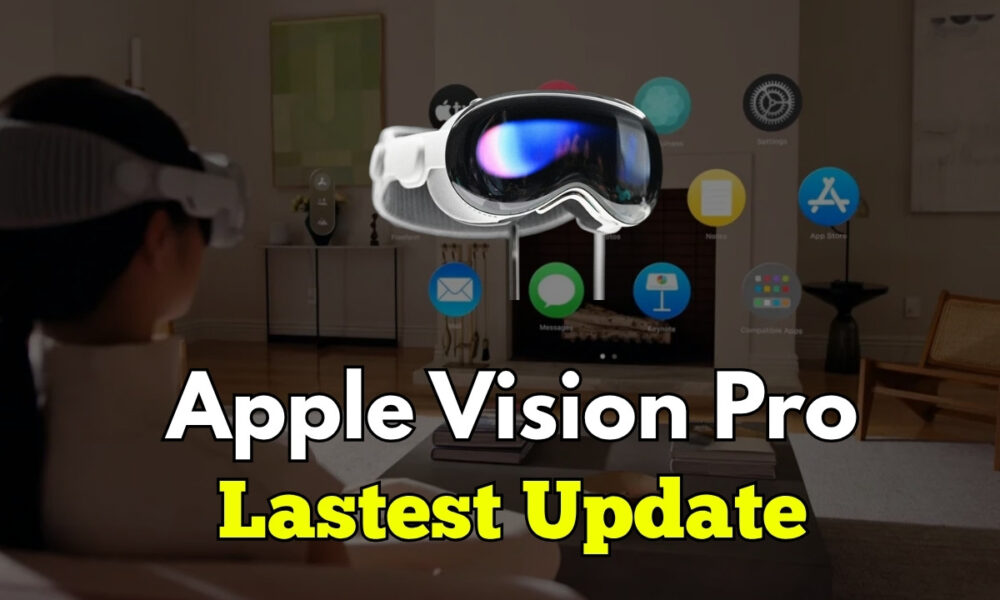
In June 2023, Apple unveiled one of its most anticipated and daring products — the Apple Vision Pro. This wasn’t just another headset. It was a declaration that Apple is stepping into a new era: the age of spatial computing.
Apple Vision Pro is a mixed reality headset that blurs the line between the digital and physical worlds, allowing users to interact with apps, entertainment, and environments in entirely new ways. Years in the making, Vision Pro reflects Apple’s ambition to redefine how we work, connect, create, and consume content — no longer bound by screens.
This post explores the journey, technology, use cases, and potential impact of Apple’s boldest innovation since the iPhone.
Apple Vision Pro – Key Timeline & Development
| Year | Event | Significance |
|---|---|---|
| 2015–2020 | Secret internal R&D by Apple | Worked on spatial computing, sensors, and advanced AR/VR integration |
| 2021 | Prototypes leaked | Speculation around Apple’s move into AR/VR hardware grew |
| June 2023 | Official reveal at WWDC | Vision Pro introduced as Apple’s first spatial computer |
| Early 2024 | Product launch in US | Delivered to consumers with premium build and new OS (visionOS) |
| 2025+ | Expansion expected worldwide | Signals Apple’s push toward mainstreaming spatial computing |
What Is Spatial Computing?
Spatial computing refers to a technology environment where digital elements exist in 3D space, reacting to the user’s position, movements, gestures, and voice. It goes beyond Virtual Reality (VR) and Augmented Reality (AR) by integrating real-time physical interaction with immersive computing.
Apple Vision Pro lets users:
- View and organize apps in 3D space
- Watch movies on massive virtual screens
- Interact with 3D content using hands, eyes, and voice
- Switch between immersive and augmented views
- Use productivity tools without physical monitors
This is not just AR or VR — it’s a computing revolution where your workspace is your world.
Features That Define Apple Vision Pro
1. Dual 4K Micro-OLED Displays
Each eye sees a resolution beyond 4K, delivering an ultra-crisp, high-fidelity visual experience. Perfect for watching movies, viewing 3D objects, or editing high-res files.
2. visionOS Operating System
A brand-new Apple OS built specifically for spatial experiences, visionOS supports multi-app viewing, dynamic scaling, and eye-tracking interactions.
3. Hand, Eye, and Voice Input
There are no controllers. Instead, Vision Pro reads your eye movements, hand gestures, and voice commands to navigate, scroll, type, and interact — offering an entirely natural user interface.
4. Digital Persona and FaceTime
Vision Pro creates a realistic avatar of the user for video calls, maintaining eye contact and facial expression using real-time scans — a first for remote interaction.
5. Environments and Immersion
Users can transform their surroundings with immersive backgrounds — turning a small room into a private theater, peaceful landscape, or workspace floating above clouds.
6. Seamless Integration with Apple Ecosystem
You can sync with your Mac, iPhone, and iCloud. Vision Pro becomes an extension of your Apple universe, enabling drag-and-drop, screen mirroring, and native continuity.
Applications of Vision Pro
Entertainment & Media
Watch movies, TV shows, and 3D films on a screen that feels 100 feet wide. With Dolby Atmos support and spatial audio, it’s like being in a private cinema.
Productivity & Collaboration
Use multiple virtual displays. Host FaceTime meetings. Sketch in 3D. With apps like Keynote, Safari, and Notes redesigned for spatial interaction, Vision Pro reimagines remote work.
Design & Engineering
Architects, 3D designers, and game developers can visualize work in real scale — enabling faster iteration and better creativity.
Education & Training
Simulations in healthcare, science, aviation, and more become highly immersive and realistic, giving learners a deeper and more intuitive experience.
Challenges and Criticism
Despite its innovation, Apple Vision Pro is not without challenges:
- High Price Tag (~$3,500 at launch)
- Battery life limitations (external battery, 2-hour use)
- Initial app ecosystem still developing
- Not yet mass-market friendly
But as with the original iPhone or Apple Watch, Vision Pro is likely the beginning of a longer journey, with future models becoming more accessible and widespread.
Conclusion
Apple Vision Pro represents a turning point — not only for Apple but for the future of human-computer interaction. It’s a glimpse into a world where the screen disappears, and digital content becomes part of your physical reality. From productivity to entertainment, Vision Pro has redefined what it means to compute spatially.
Just like the iPhone reimagined communication, Vision Pro aims to redefine interaction. Its success won’t be judged solely on first-gen sales but on how it seeds the next generation of immersive technology.
Apple is not just entering the headset race — it’s inventing a new category altogether.